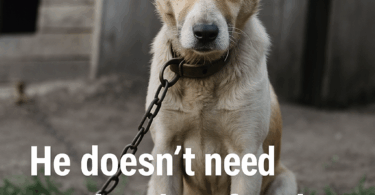
Some images don’t need an explanation. This is one of them.
A sad pair of eyes.
A rusty chain.
A life that never had the chance to begin.
It’s easy to keep scrolling when the world feels overwhelming — yet, it’s in these quiet moments, when we stop for just one picture, that compassion finds its way back into our hearts.
This isn’t just about one dog. It’s about every chained, forgotten, and neglected soul that still waits for someone to care.
1. The Picture That Stopped Thousands
It started as an ordinary day on social media.
Between memes, ads, and selfies, a photo appeared: a dog sitting in front of a wooden shed, his head lowered, his eyes pleading for something no human could ignore.
The caption read: “If you’re against animal cruelty, don’t scroll.”
And people didn’t scroll.
They paused. They stared. They shared.
Within hours, the image spread like wildfire — not because it was graphic, but because it was real. It showed something most people prefer not to see: the quiet suffering that hides in plain sight.
2. Behind the Photo — A Harsh Reality
What most people didn’t know was that the dog in that picture had spent his entire life on a chain.
Rain, heat, cold — it didn’t matter.
He was tied to the same spot every single day.
His world was limited to a few feet of dirt. His food came from an old metal bowl, half-filled, often forgotten. His only shelter was a broken piece of wood leaning against the shed.
He wasn’t abused in the traditional sense.
No one hit him. No one screamed at him.
But neglect — the silent kind — can be just as cruel.
He had no love, no warmth, and no freedom. And that’s what made the picture so powerful — because it wasn’t unique.
For every photo like his, there are thousands of unseen animals living the same way.
3. The Psychology of “Scrolling Past”
In the age of endless content, compassion fatigue is real.
We see so much pain online that, eventually, our minds learn to skip it — to protect ourselves.
But sometimes, a single image breaks through that wall.
Experts in psychology call it the “Empathy Disruption Point.”
It’s when a visual is so emotionally raw, so human, that it stops the brain’s autopilot mode.
That dog’s picture did exactly that.
It forced people to feel something again. And feelings — when channeled right — lead to action.
4. The Human Side of Responsibility
Let’s be honest: not every act of cruelty is done out of evil.
Some are born from ignorance, poverty, or a lack of awareness.
Many people who chain their dogs think they’re keeping them safe — unaware that tethering causes extreme psychological and physical damage.
According to the Humane Society of the United States, chained dogs are more likely to become aggressive, anxious, and unhealthy.
Constant restraint can cause neck wounds, infections, and even depression.
Yes — animals feel depression, too.
They mourn.
They grow hopeless.
And worst of all, they stop believing anyone will help them.
5. What Freedom Really Means
Freedom for an animal isn’t about luxury.
It’s about movement.
It’s about connection.
It’s about being able to feel the sun, the rain, the grass, and the love of another living being.
When a chained dog is finally released, something magical happens.
At first, they hesitate — unsure if it’s real. Then they take a few small steps. They sniff the air. They test their limits.
And then they run.
It’s as if every moment of sadness burns away in that first sprint. You can see the joy, the disbelief, the rebirth.
Freedom isn’t just physical — it’s emotional.
6. The Ripple Effect of Awareness
That single post — “If you’re against animal cruelty, don’t scroll” — started a wave.
Animal shelters saw more donations.
Rescue volunteers got more messages.
People began noticing chained dogs in their neighborhoods and reporting them.
One woman wrote in the comments:
“I saw this post and realized my neighbor’s dog has been tied up for months. I made a call. He’s free now.”
That’s the power of awareness.
It doesn’t take millions of dollars — just millions of hearts willing to care.
7. What the Law Says (and What It Misses)
In many U.S. states, tethering laws now exist, but enforcement is weak. Some states allow chaining for “short periods,” a term often abused.
Animal welfare organizations have long pushed for complete bans on unsupervised tethering, arguing that it’s outdated, dangerous, and unnecessary.
But laws alone can’t change hearts.
Education — and visibility — can.
That’s why viral stories like this one matter. They make people see what laws alone can’t reach.
Every share, every click, every conversation pushes the world one inch closer to compassion.
8. Real Stories, Real Change
After the viral success of the “Don’t Scroll” campaign, animal welfare groups began sharing similar messages:
🐾 “If you wouldn’t live like this, why should they?”
🐾 “Unchain the voice that can’t ask for help.”
🐾 “A leash for a walk, not for a lifetime.”
Each one carried the same core message — empathy.
And it worked.
Thousands of chained dogs were reported, rescued, and rehomed thanks to people who decided not to scroll.
One rescue worker said:
“The internet can be cruel, but sometimes it becomes a lifeline. That one image saved more lives than we’ll ever know.”
9. How to Make a Difference (Even From Your Phone)
You don’t have to be an activist to make change.
Here’s what you — yes, you — can do today:
💡 1. Don’t Ignore It
If you see a neglected or chained animal, document it. Take pictures, videos, note the address. Then report it to your local shelter, police, or humane organization.
❤️ 2. Support Local Shelters
Even a small donation — $5, $10 — can buy food, blankets, or medical supplies for rescue dogs.
🐕 3. Foster or Adopt
Shelters are overflowing. Fostering for even a few weeks gives animals a second chance to socialize and heal.
📣 4. Spread Awareness
Use your social media voice for something meaningful. Share stories, pictures, and posts that raise awareness.
🧠 5. Educate
Talk to people — friends, neighbors, kids — about why chaining is cruel. Most people simply don’t know how damaging it is.
10. The Emotional Truth
There’s something profoundly human about compassion.
When we stop feeling empathy, we lose a piece of ourselves.
That’s why stories like this one matter. They remind us that we’re connected — humans, animals, all living beings — through the same thread of emotion.
A chained dog doesn’t just represent cruelty.
He represents every small injustice we’ve ever ignored.
And the moment we decide not to scroll — that’s when the healing begins.
11. A Message to the Reader
If you’ve read this far, you’re already part of the solution.
You didn’t scroll.
You stopped. You cared.
That means something.
Because in a world full of noise, taking a moment to feel is a radical act of kindness.
Somewhere out there, a dog is still waiting — chained, quiet, forgotten.
And maybe your awareness, your voice, or your share will be the reason that chain finally falls to the ground.
Final Words
He can’t speak for himself.
He can’t ask for freedom.
But we can.
The next time you see a post like this, don’t scroll.
Don’t look away.
Because change begins the moment you choose not to.